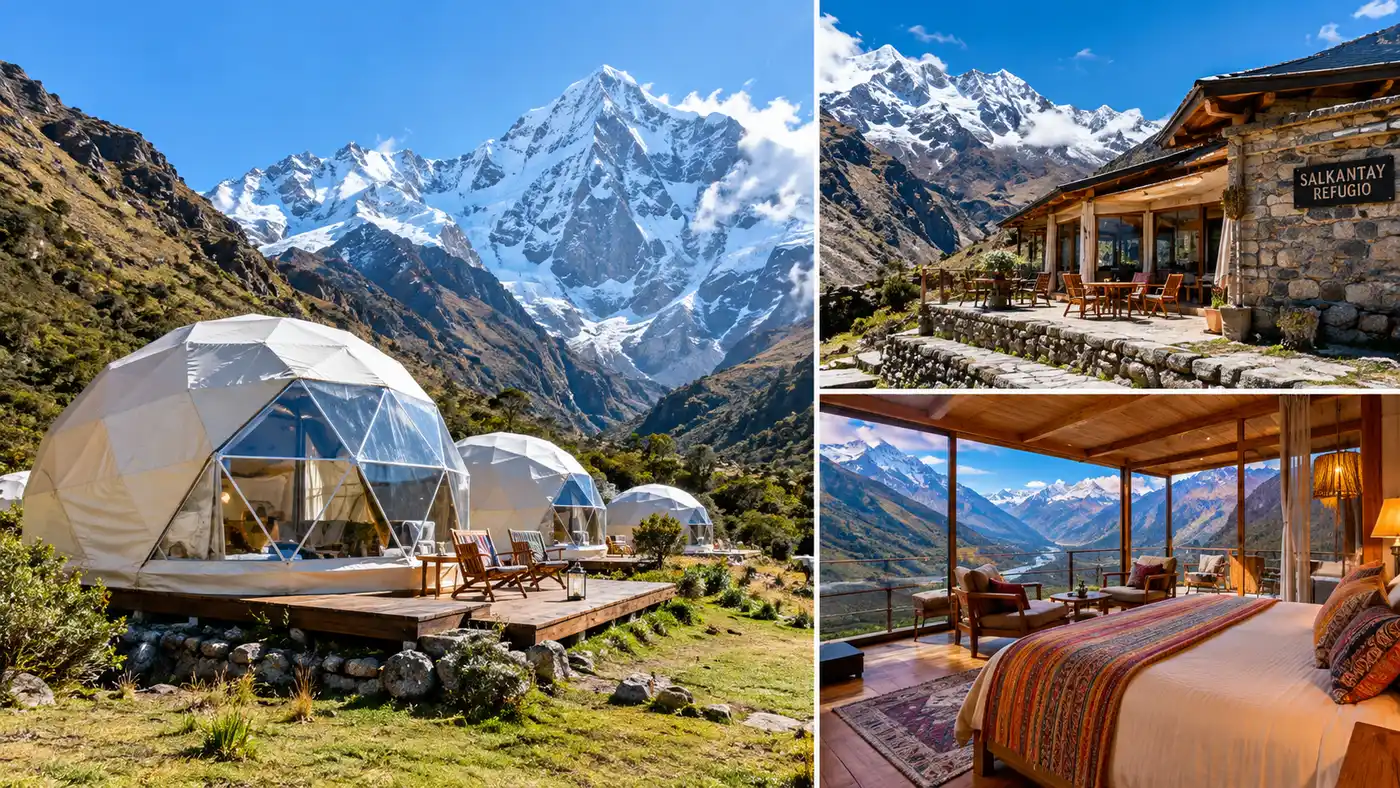
Salkantay Trek Accommodations: Refugios, Domes, and Luxury Lodges
Ten years ago, hiking to Machu Picchu via Mount Salkantay meant pitching a leaky two-person tent on frozen grass, clutching a lukewarm bottle of boiled water, and praying your sleeping bag held out until sunrise. Things look entirely different today. Choosing the right salkantay trek accommodation shapes your entire experience on the trail, determining whether you spend your evenings shivering in damp socks or sipping hot coca tea under a warm duvet while gazing through a panoramic glass roof.
Options on the trail now range from five-dollar plywood bunkhouses run by local coffee farmers to high-end lodges featuring outdoor hot tubs and wine cellars. You will find glass sky domes, alpine huts, converted agricultural homesteads, and luxury mountain chalets scattered between Challacancha and the cloud forest. Picking among them comes down to your budget, your tolerance for cold mountain drafts, and how much comfort you really want after nine hours of uphill slog.
Book your salkantay trek to machu picchu experience:
The Classic Route: Refugios and Village Homestays
Independent hikers and small budget groups usually gravitate toward the family-run network of Andean refugios. These are not Swiss-style chalets with radiant subfloor heating. A typical refugio salkantay is a rustic, wood-frame or adobe shelter built right beside a family home in hamlets like Soraypampa, Chaullay, or Lucmabamba. You get a simple room with two to four wooden beds, foam mattresses, thick synthetic blankets, and corrugated tin roofing that rattles loudly whenever the wind picks up off the glacier.
Staying at community-level refugios salkantay gives you an unfiltered window into everyday mountain life. In Chaullay, for instance, dinner is often served right in the family kitchen, where you will sit on rough wooden benches eating steaming bowls of quinoa soup and lomo saltado while guinea pigs scurry in pens beneath the floorboards. The people running these places work hard to keep guests fed and sheltered, though the amenities stay basic. Walls are paper-thin, electric outlets are sparse, and doors rarely have anything more sophisticated than a simple barrel bolt on the inside.
Prices for simple salkantay refugios run between 30 and 60 soles per night, which works out to about $8 to $16. If you want a hot shower, the owner will usually fire up a small propane tank heater for an extra 10 to 15 soles. Bring cash in small bills for these stops because nobody up at 3,900 meters is taking credit cards, and making change for a 100-soles note can cause a minor crisis in a mountain village.
Note: Blankets in rustic refugios are thick, heavy, and warm, but they are rarely washed between every hiker. A light silk or cotton sleeping bag liner saves you from worrying about dust mites or scratchy synthetic fibers.
The Glass Domes: Geodesic Pods Under the Stars
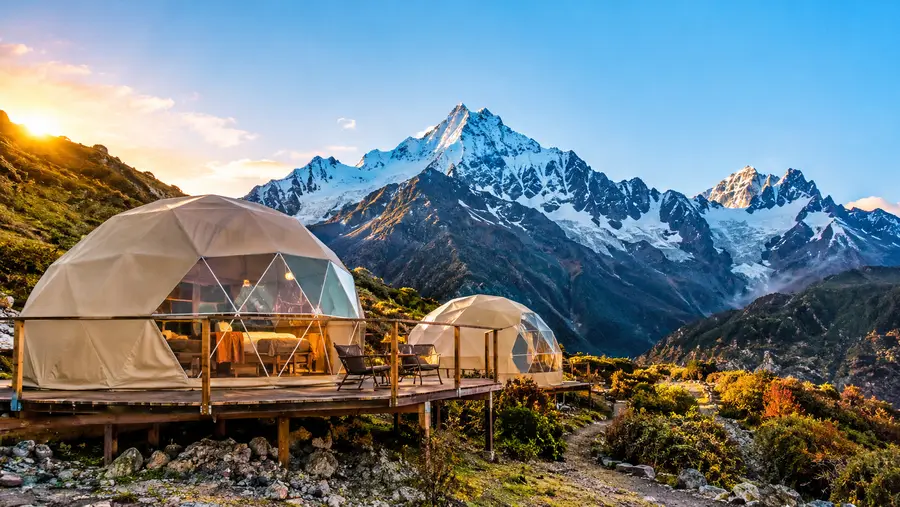
Sometime around 2016, tour companies started building geodesic domes at Soraypampa, and the concept quickly spread along the entire trail. Today, walking into the flat plain below Mount Humantay feels a bit like stumbling onto a lunar colony. These domes feature clear polycarbonate or glass panels facing the peaks, allowing you to lie in bed and watch the southern constellations sweep across the dark sky above Salkantay.
Sleeping in a dome sounds romantic, and on a cloudless night it genuinely is breathtaking. Still, you should know what you are getting into before booking one. Geodesic pods trap solar heat beautifully during the afternoon, turning into miniature greenhouses by 3:00 PM. Once the sun dips behind the granite ridgelines, that heat escapes rapidly through the thin skin. By midnight, interior temperatures drop to just a few degrees above whatever it is outside, often hovering around 2 to 4 degrees Celsius at high camps. Condensation builds up on the inside panels, occasionally dripping directly onto your face while you sleep.
Most mid-tier trekking agencies include dome stays as part of their standard packages. Higher-end domes come equipped with private ensuite bathrooms and small pellet stoves, while basic versions use communal bathroom blocks twenty meters out in the cold. If you need to make a bathroom run at 2:00 AM, you will be lacing up boots and throwing on an insulated parka just to cross the frozen gravel.
Pro tip: Wipe down the clear dome panels near your pillow with a small pack towel before you fall asleep, which stops heavy morning condensation from dripping onto your sleeping bag.
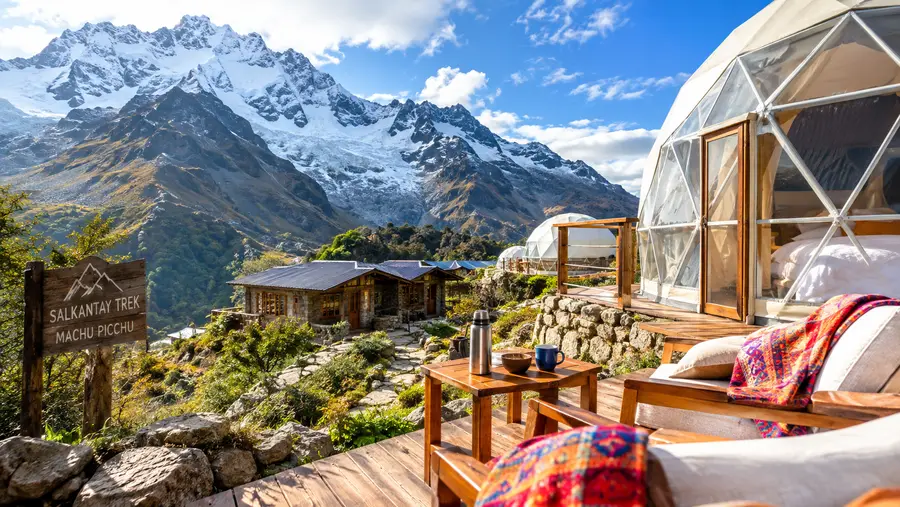
The Luxury Salkantay Trek: Mountain Lodges of Peru
At the opposite end of the spectrum sits the salkantay lodge to lodge trek journey to machu picchu, managed almost exclusively by Mountain Lodges of Peru (MLP). This is an entirely different world of trekking. Instead of sharing a drafty bunkhouse with snoring hikers, you arrive each afternoon at a stone-and-glass lodge where staff members greet you at the entrance with warm towels and freshly squeezed fruit juices.
A true luxury salkantay trek eliminates virtually every physical discomfort associated with Andean hiking. You sleep on plush down mattresses dressed in 400-thread-count cotton sheets, step into private slate bathrooms with powerful, endless hot water, and thaw your trail-weary legs in open-air cedar hot tubs positioned with direct views of snowfields. The dining rooms serve three-course meals showcasing contemporary Peruvian cuisine paired with regional South American wines.
The centerpiece property is Salkantay Lodge, perched at 3,869 meters in Soraypampa. From there, the route moves through Wayra Lodge at Chaullay, Colpa Lodge overlooking a lush river confluence, and finally Lucma Lodge nestled right inside an organic coffee plantation. It is a spectacular way to experience the Andes, though it comes at a steep price, typically running between $3,500 and $5,000 per person for a seven-day package. If you have the budget, booking a salkantay lodge trek to machu picchu lets you tackle high-altitude mountain passes without sacrificing an ounce of physical comfort.
Book your salkantay trek to machu picchu experience:
Accommodation Options Broken Down by Night
Where you sleep depends heavily on the pace of your trip. Most hikers follow a four-night or five-night schedule, moving from freezing alpine heights down into humid sub-tropical valleys before ending at the foot of Machu Picchu. For a detailed breakdown of the walking distances and route segments, check out our Salkantay Trek 5-day itinerary guide.
- Night 1 (Soraypampa, 3,900m): Extremely cold. Options include basic tents inside protective shelters, family-run refugios, glass sky domes, or the high-end Salkantay Lodge. Expect nighttime temperatures near or below freezing.
- Night 2 (Chaullay or Collpapampa, 2,900m): Much warmer. The landscape transitions into high jungle. You will find A-frame wooden huts, simple homestays, private campsites, and Wayra Lodge.
- Night 3 (Lucmabamba or Santa Teresa, 1,900m - 2,050m): Warm and humid. Lucmabamba offers excellent coffee-farm homestays and geodesic domes; Santa Teresa has small hostels, riverside campsites, and access to the Cocalmayo hot springs.
- Night 4 (Aguas Calientes, 2,040m): A bustling tourist town. Every style of accommodation exists here, from cheap $15 backpacker hostels along the train tracks to five-star boutique retreats like the Inkaterra Machu Picchu Pueblo Hotel.
Here is how the main accommodation categories stack up against each other across the trail:
| Accommodation Type | Nightly Cost Range | Typical Night 1 Temp | Shower Situation | Electricity / Charging |
|---|---|---|---|---|
| Standard Camp Tents | Included in budget tours | -2°C to 4°C | Cold or small fee for gas | Rarely available at site |
| Rustic Refugios | $8 - $16 (30 - 60 soles) | 3°C to 7°C | Gas-heated for 10-15 soles | Common area only, fee possible |
| Geodesic Sky Domes | $40 - $110 (or mid-tier tour) | 2°C to 8°C | Shared or private hot shower | Usually available in dome |
| Luxury Mountain Lodges | $500+ (part of all-inclusive) | Heated interiors (18°C+) | Ensuite private hot showers | Full power, Wi-Fi included |
Trail Amenities: Hot Water, Power, and Internet
Do not take basic utilities for granted once you leave Mollepata. The logistical reality of running hot water lines and electricity grids through unstable mountain terrain means services are fragile. Knowing what to expect prevents frustrating surprises when your phone battery dies halfway through day two.
Hot water at high elevations depends on bottled gas hauled up by pack mules or pickup trucks. In budget refugios, the water pressure fluctuates wildly. You might enjoy thirty seconds of pleasant warmth followed immediately by an icy shock when someone turns on a tap in the neighboring kitchen. The higher you are, the harder it is for small gas heaters to warm glacier-fed runoff, so keep your showers quick and realistic.
Electricity is similarly unpredictable. In Soraypampa, most domes and refugios draw power from small solar arrays or noisy diesel generators that shut down promptly at 9:00 PM. Refugio owners will often charge hikers 5 to 10 soles to plug a phone or camera into a multi-strip behind the dining counter. You will definitely want to pack a heavy-duty portable power bank to stay self-sufficient. For more advice on cold-weather battery care and essential gear, look through our Salkantay packing and gear guide.
- Wi-Fi connections: Satellite internet (mostly Starlink now) has spread across the trail, with owners selling access cards for 10 to 20 soles per 24-hour block, though signal speeds drop when rain clouds roll in.
- Bathroom plumbing: Septic systems on the trail are delicate. Toilet paper goes directly into the waste basket beside the toilet, never into the bowl, even in mid-range hotels.
- Drinking water: Never drink unboiled tap water from any refugio sink. Buy treated bottles locally or carry chlorine dioxide purification tablets.
- Baggage handling: If you book through an agency, pack horses carry your main duffle bag between camps, meaning you only hike with your daypack.
Frequently Asked Questions about salkantay trek accommodation
Do I need to carry a sleeping bag if I stay in domes or refugios?
Yes, bring a compact sleeping bag rated down to at least 0°C (32°F). Refugios provide blankets, but mountain drafts cut straight through them on night one at Soraypampa, and agency-provided domes rarely include heated bedding unless you are on a premium tour.
Can I book Salkantay refugios in advance as an independent hiker?
Most basic refugios operate on a walk-in basis, and you will almost always find an open bed except during the absolute peak of dry season in July and August. Domes, however, are contracted out to trekking agencies months ahead and must be reserved well in advance.
Are there private bathrooms in the geodesic domes?
It depends entirely on the operator. Budget dome camps use communal outhouses and shared shower blocks, while upscale versions offer private attached bathrooms with flushing toilets and glass-walled showers.
How do the Mountain Lodges of Peru properties compare to standard hotels?
They rival top boutique hotels found in Cusco or Lima. You get hydronic heating, fine dining, professional massage services, and outdoor Jacuzzis, set against remote high-altitude peaks where standard amenities do not exist.
Quick Reference
- Refugios cost roughly $8 to $16 per bed per night
- Night 1 at Soraypampa drops below freezing regularly
- Hot showers usually cost 10 to 15 soles extra
- Starlink satellite Wi-Fi is widely available for a small fee
Book your salkantay trek to machu picchu experience:
My Take
If you ask me, the middle ground delivers the best experience on Salkantay. Spending thousands on private chalets disconnects you from the raw, gritty atmosphere that makes the Andes special, but freezing in a waterlogged ground tent simply leaves you too exhausted to appreciate the pass. Booking a trip with geodesic domes or cozy wooden huts gives you hot food, a comfortable mattress, and a roof over your head without buffering you completely from the mountain environment. Pack a warm sleeping bag liner, keep five-soles coins handy for showers, and look forward to falling asleep to the sound of glacial ice calving off Salkantay in the distance.
Read more about salkantay trek to machu picchu.