Salkantay Trek 4-Day Itinerary Guide
Most people who head to Peru have five days circled on their calendar for the mountains, but if your flight leaves on Sunday and you still want to stand beneath towering granite peaks, the salkantay trek 4 days route is the sharpest shortcut you can take. It squeezes roughly 60 kilometers of rugged Andean trails into a tighter schedule by cutting out the slower sections along the lower river valley. You will sweat more, sleep a bit less, and wake up on the fourth morning looking directly at the Sun Gate.
I took this shortened route after losing two days to a delayed connection in Lima. My legs were nervous about the pace, yet the compression actually makes the journey feel like a true alpine charge. Over three nights and four days, you climb from desert-scrub foothills straight into sub-zero glaciated passes, drop through dripping bamboo forests, follow rusted railway tracks, and end in the cloud-forest ruins of the Incas. Here is how the 4 day salkantay trek plays out mile by mile, along with honest notes on what hurts and what helps.
Day 1: Cusco to Soraypampa and the Turquoise Cold of Humantay
Your alarm will go off around 4:15 AM in Cusco. The streets are pitch black, freezing, and smell faintly of wet asphalt and diesel from tourist vans idling outside stone doorways. The three-hour drive to Mollepata winds through steep agricultural terraces where local farmers herd cattle in thick woolen ponchos. You stop at a nondescript cafeteria for a quick bowl of hot quinoa porridge and eggs, which costs about 12 soles if it is not folded into your tour price. Eat as much bread as you can stomach. You need the fuel.
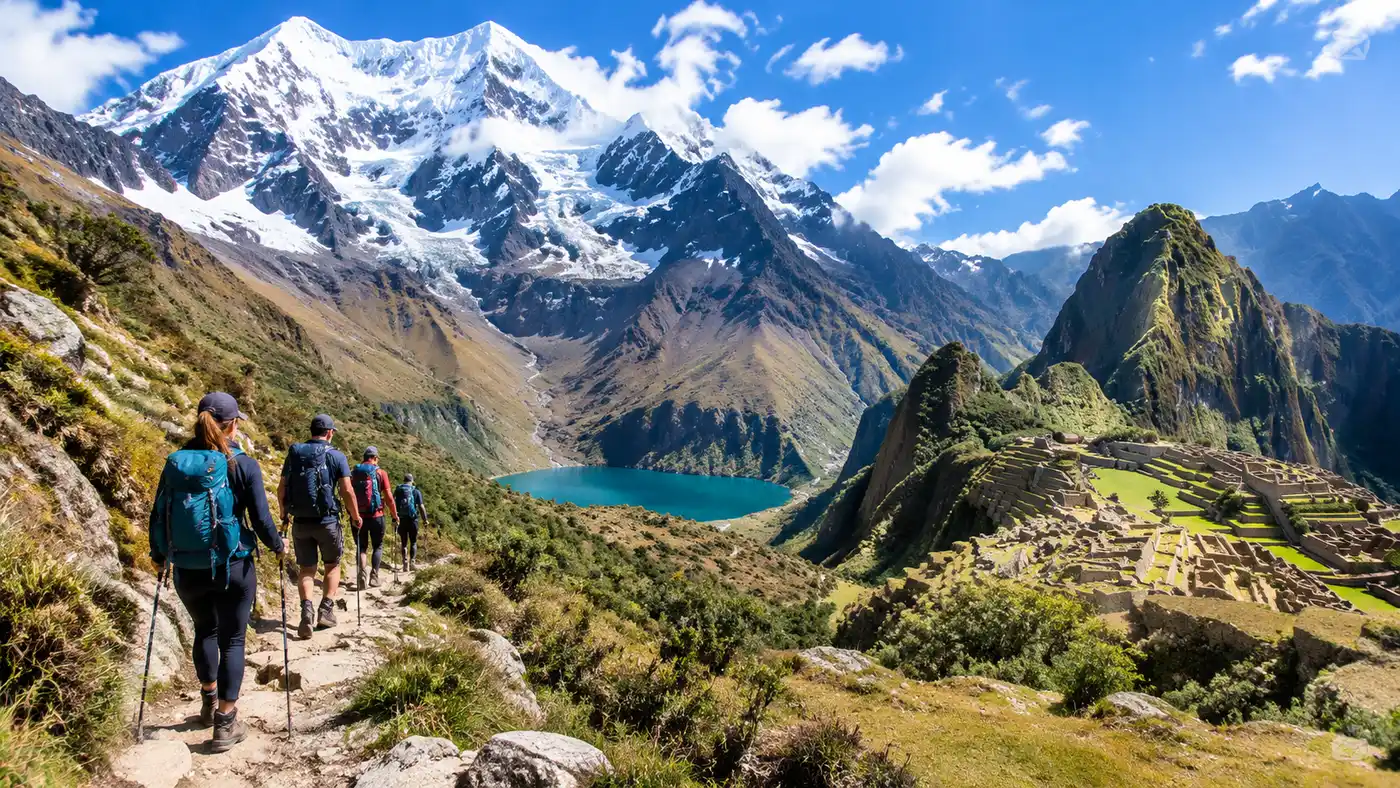
From Mollepata, the road turns into rutted dirt climbing toward Challacancha. Most trekking groups begin walking here around 9:30 AM along a gently sloping aqueduct carved into the mountainside. The trail is wide and open. You look straight up the valley toward Mount Humantay, its ridgelines caked in brilliant white ice that looks close enough to touch even though it sits miles away. The air thins out fast here. You are already at 3,600 meters above sea level, and your lungs will remind you with every ten steps uphill.
Pro tip: Rent two trekking poles in Cusco for roughly 25 soles before leaving. The descent from the pass on day two will punish your knees without them.
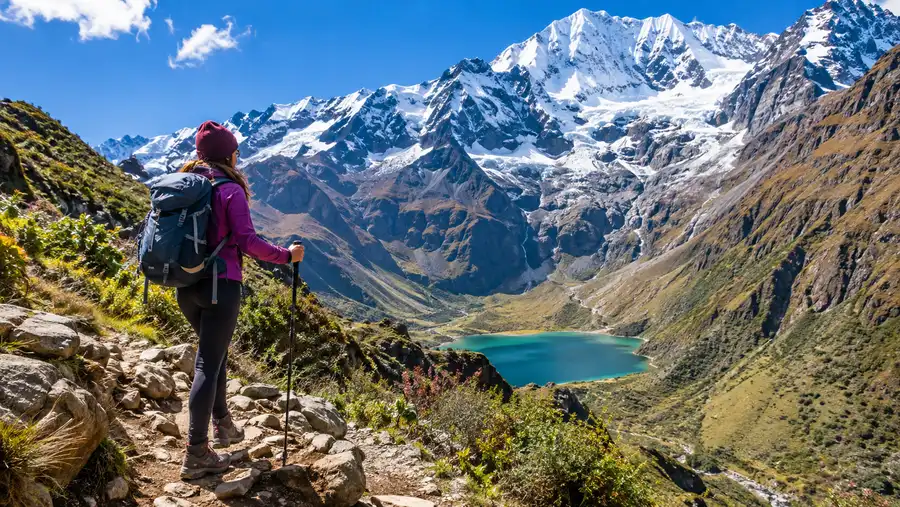
You arrive at the base camp at Soraypampa around 1:00 PM for lunch. The shelters here range from basic canvas tents to glass-topped geodesic domes that light up like lanterns at night. After an hour resting on a wooden bench with a mug of steaming muña tea, you leave your heavy duffel behind and begin the steep, switchbacking climb up to Laguna Humantay. This side hike takes roughly 90 minutes. It is steep, dusty, and slick with loose scree. When you top the crest at 4,200 meters, the turquoise water sits dead still beneath hanging glaciers. The color comes from mineral silt washed out of the ice above. Sit there until the wind bites through your fleece, then jog back down to camp before dusk drops the temperature to below freezing.
Book your salkantay trek to machu picchu experience:
Day 2: Over the Frozen Salkantay Pass to the Cloud Forest
Guides knock on tent flaps around 5:00 AM holding tin cups of hot coca tea. The grass outside is stiff with white frost. You pack your sleeping bag with numb fingers, bolt down a plate of fried pancakes, and start climbing by 5:45 AM. The initial stretch out of Soraypampa is known as the Trail of the 7 Snakes, a series of relentless switchbacks grinding over grey moraine rock. This is the hardest physical stretch of the entire 4 day trek to machu picchu.
You reach the Salkantay Pass at 4,630 meters after about three hours of steady, measured steps. The massive bulk of Mount Salkantay towers right over your right shoulder, groaning and cracking as the morning sun warms the glaciers. Hikers build small stone cairns called apachetas here to ask the mountain spirits for safe passage. If you want a detailed look at how the elevation changes across these stages, check out our guide to the Salkantay Trek altitude and elevation profile before you set off.
The transition after the pass is abrupt. You leave the freezing alpine wind behind and plunge nearly 1,000 meters down into a rocky canyon. Your knees take a beating over the gravel. By midday, you hit Huayracmachay, a bleak outpost where hot soup and rice appear on plastic tables under a tin roof. After lunch, the landscape softens completely. The grey stone gives way to mossy boulders, flowering orchids, and rushing streams. You end the 22-kilometer day in Chaullay or Collpapampa, where the air feels warm and humid. Hot showers run about 10 soles here, and they are worth every single coin.
Day 3: Through the Orchids, Rail Lines, and Aguas Calientes
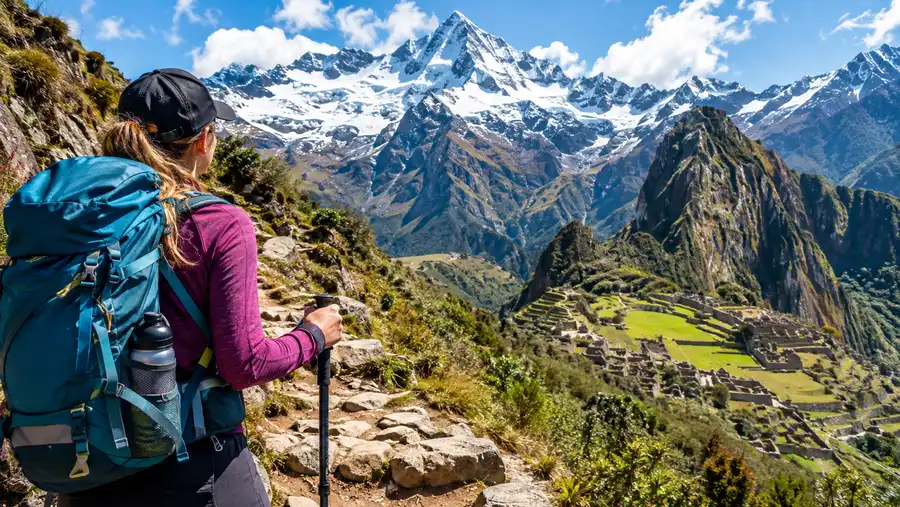
Waking up at 2,900 meters feels like luxury compared to the icebox of Soraypampa. You set off at 6:30 AM along the roaring Santa Teresa River. This section cuts straight through high jungle, locally called the ceja de selva. You walk past small family plantations growing yellow granadillas, avocados, and dark coffee beans drying on blue tarps in the front yards. Local kids sell fresh passion fruit juice from small wooden stalls for 3 soles a cup.
In a standard 5-day itinerary, hikers usually stop to sleep near Lucmabamba and climb over Llactapata pass. On a salkantay trek 4d 3n to machu picchu, that section gets compressed. You hike roughly five hours to the road crossing at Playa Sahuayaco, then hop into a shared transport van for the 45-minute drive down to the Hidroeléctrica train station. Skipping this flat, dusty dirt road by vehicle is the main compromise of the four-day route, and honestly, you miss very little scenery by taking the wheels.
Note: Walking the railway tracks from Hidroeléctrica takes three solid hours on uneven gravel ballast, so do not let your guide convince you to start after 2:30 PM unless you enjoy stumbling in the dark with a headlamp.
From Hidroeléctrica, the only way forward without paying $35 for a 30-minute train ticket is your own two feet. You walk along the railway tracks beneath towering green cliffs, with the Urubamba River churning violently below. It is completely flat, but after 16 miles already behind you, the wide track ties feel rough on tired soles. You hit the neon signs and pizza smells of Aguas Calientes just before twilight, check into a real hostel, and finally sleep on a mattress.
Book your salkantay trek to machu picchu experience:
Day 4: Machu Picchu Sanctuary and the Journey Back
Day four is pure reward. You can either line up for the shuttle buses at 5:00 AM or tackle the 1,700 damp stone stairs carved into the mountainside. The bus costs $12 each way and spares your calves, which will already feel tender from the long railway walk. By 6:15 AM, you are clearing the main gate of the sanctuary.
The early morning mist clings to the terraced hillsides like spun cotton. As the morning sun creeps over the high ridges, the stone city appears suddenly below you. If you booked Circuit 2 months ago, you get the classic postcard view from the guardian houses before weaving through the royal quarters, the Temple of the Sun, and the Intihuatana stone. You spend roughly three hours walking the circuits before walking back down to Aguas Calientes for lunch.
Getting back to Cusco takes time and patience. You board the PeruRail or Inca Rail train back to Ollantaytambo in the afternoon. The train takes about an hour and forty minutes, winding gently alongside the river through the Sacred Valley. From the station at Ollantaytambo, private minivans or tour buses wait in chaotic parking lots to haul trekkers over the plateau back to Cusco. You will tumble out in the Plaza San Francisco around 8:00 PM, covered in dried mud, smelling of woodsmoke, and completely exhausted.
Comparing the 4-Day Route Stages
The pace on this four-day trek to Machu Picchu is brisk. You cover nearly the same alpine terrain as the longer routes, but the drop into the valley floor happens on an accelerated clock. The breakdown below shows the exact physical demands you face each day.
| Stage | Distance | Hiking Time | Max Elevation | Overnight Stop |
|---|---|---|---|---|
| Day 1: Challacancha to Soraypampa & Humantay | 13 km | 6 hours | 4,200 m | Soraypampa Domes |
| Day 2: Soraypampa over Pass to Chaullay | 22 km | 9 hours | 4,630 m | Chaullay Campsite |
| Day 3: Chaullay to Hidroeléctrica & Aguas Calientes | 26 km (16 km walking) | 7 hours | 2,900 m | Aguas Calientes Hotel |
| Day 4: Machu Picchu Citadel to Cusco | 4-8 km | 3-4 hours | 2,430 m | Cusco City |
Costs, Logistics, and Essential Preparation
Pricing for the salkantay trek 4 days to machu picchu cost depends heavily on whether you book through a high-end agency or join a group tour gathered on the streets of Cusco. If you want a deep dive into expenses, our breakdown of the Salkantay Trek cost and prices covers permits, hidden fees, and tipping norms in detail. A dependable group service generally runs between $380 and $550 per person, covering transport, basic lodging, food, and the essential entry tickets.
Packing for four days across wild microclimates means you cannot afford dead weight in your duffel bag. Horse teams carry up to 5 kilograms of your gear on days one and two, but once you reach Hidroeléctrica, you carry whatever you brought.
- Layered alpine clothing: Pack thermal leggings, a thick down jacket, and windproof shell pants for the pass, alongside two breathable t-shirts for the jungle floor.
- Footwear choices: Broken-in waterproof hiking boots with solid ankle support are non-negotiable for the rough granite scree. Bring light sandals for camp.
- Hydration and filters: Two one-liter water bottles and a strip of chlorine purification tablets save you from buying overpriced plastic bottles in tiny villages.
- Cash reserve: Carry at least 350 Peruvian soles in small bills for bathroom fees, hot showers, snacks, and tips for the muleteers and cooks.
Make sure you spend at least two full calendar days in Cusco before tying your laces. Drinking tea in a cafe at 3,400 meters sounds lazy, but resting gives your blood cells time to multiply so you do not spend day two vomiting on the side of a glacier.
Frequently Asked Questions about salkantay trek 4 days
Is the 4 day Salkantay trek harder than the 5 day version?
Yes. You walk roughly the same daily mileage during the first two days, but day three eliminates the rest period and merges the hike to Hidroeléctrica with the long railway march to Aguas Calientes. You need good endurance and stubborn legs.
Can I do the salkantay trek to machu picchu in 4 days without a guide?
You can walk it independently if you carry your own tent and food, because the Salkantay trail does not require an official government permit like the classic Inca Trail. Navigating the logistics between Lucmabamba and Hidroeléctrica on your own requires patience and fluent Spanish.
What circuit do I get at Machu Picchu on this itinerary?
Most 4 day salkantay trek to machu picchu tours include Circuit 2 or Circuit 3 tickets depending on availability when you book. Circuit 2 is the most complete route through the upper terraces, so reserve your trek at least three months in advance to secure it.
Quick Reference
- Total trail distance: roughly 55 to 61 kilometers
- Highest point: Salkantay Pass at 4,630 meters (15,190 ft)
- Difficulty rating: demanding, steep alpine and jungle hiking
- Best season: May through September for dry, clear skies
Book your salkantay trek to machu picchu experience:
The Bottom Line
Choosing the shorter four-day itinerary means trading a leisurely pace for raw efficiency. You skip an afternoon lounging by coffee farms and you spend one very long afternoon walking beside rusty steel rails, but you lose nothing of the high-mountain drama that makes this route famous across the world. If you have limited vacation time and decent fitness, this is the most exhilarating way to reach the lost city without lingering on the trail.
Read more about salkantay trek to machu picchu.