Salkantay Trek 5-Day Itinerary and Daily Guide
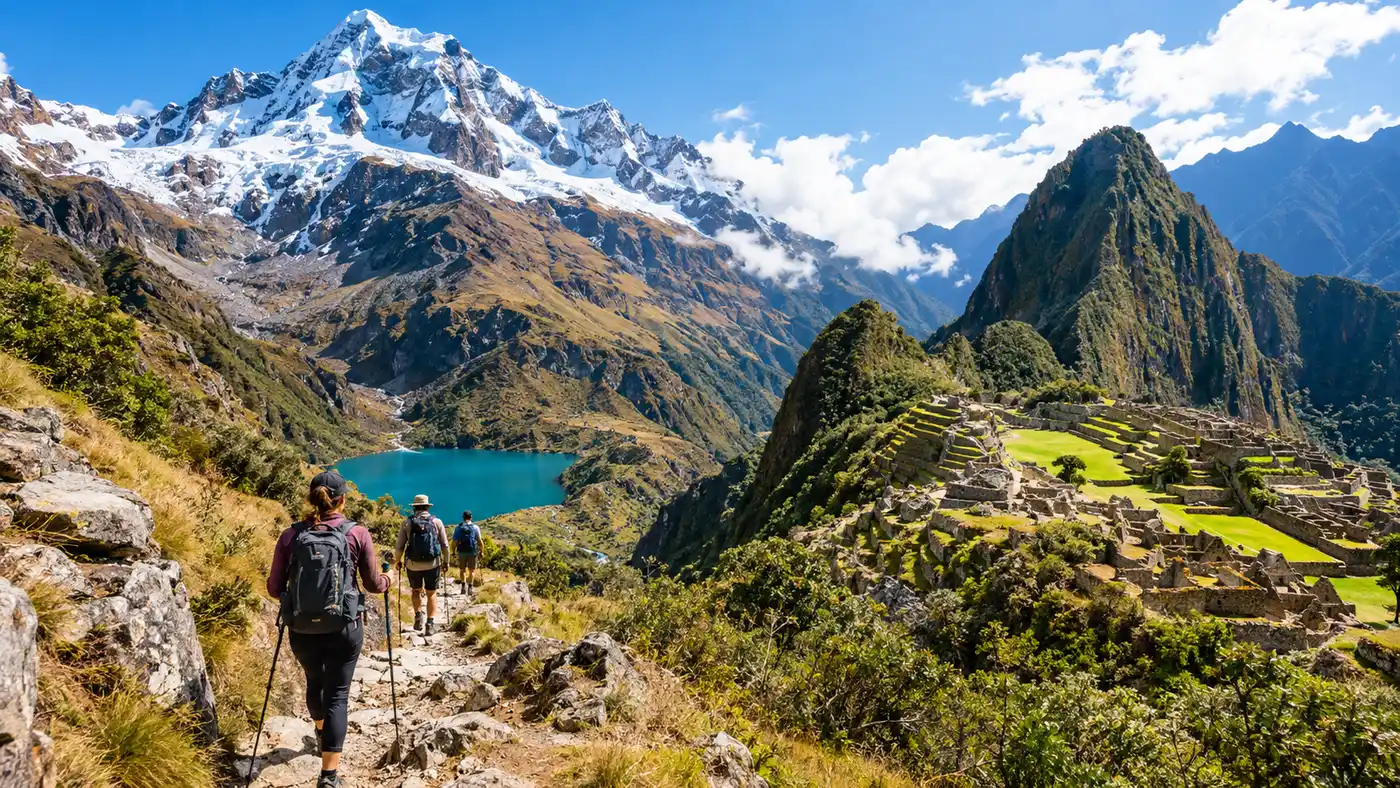
My alarm went off at 4:15 AM in a freezing Cusco hostel room, and I remember staring at the ceiling wondering why I had voluntarily signed up to walk over a 4,630-meter mountain pass. Four days later, standing at the sun gate looking across at the stone terraces of the lost citadel, that exhaustion evaporated. The 5 day salkantay trek is raw, unpredictable, and significantly more scenic than the standard Inca Trail. It strips away the manicured stone stairs and throws you against raw Andean scree before dropping you straight into the banana trees of the high Amazon basin.
Choosing this route means committing to roughly 74 kilometers of rugged trails, variable weather, and massive elevation shifts. Most operators sell the salkantay trek to machu picchu 5 days tour as an accessible alternative when Inca Trail permits sell out. It is an alternative, sure, but it stands on its own merits as a world-class alpine expedition. Below is the honest day-by-day reality of the classic route, complete with trail times, elevation changes, and the small logistical details your tour company will probably forget to mention.
Book your salkantay trek to machu picchu experience:
Day 1: Cusco to Soraypampa and the Hike to Humantay Lake
The journey starts before dawn. A small minibus collects you around 4:45 AM from your Cusco hotel, rattling through sleeping streets toward the town of Mollepata. The drive takes nearly three hours on winding mountain roads. Most groups stop in Mollepata for a quick breakfast of scrambled eggs and warm bread, and it is your last chance to buy cheap water, snacks, or toilet paper before trail prices double. From Mollepata, the van pushes higher along a dusty dirt shelf to Challacancha, where the actual walking begins.
The initial stretch to Soraypampa is gentle. You walk alongside an ancient restored water canal, following the curve of the valley floor for about three hours. It is flat, sunny, and deceptively easy. You reach the base camp at Soraypampa (3,900 meters) just in time for lunch. The towering white wall of Mount Humantay dominates the skyline directly ahead, its hanging glacier creaking under the midday sun. After dumping your duffels in your tent or glass dome, your guide will give you about an hour to rest before the afternoon climb.
Pro tip: Rent two trekking poles in Cusco before leaving. The descent from Humantay Lake is loose, powdery dirt over smooth rock, and almost everyone in our group slipped at least once without poles.
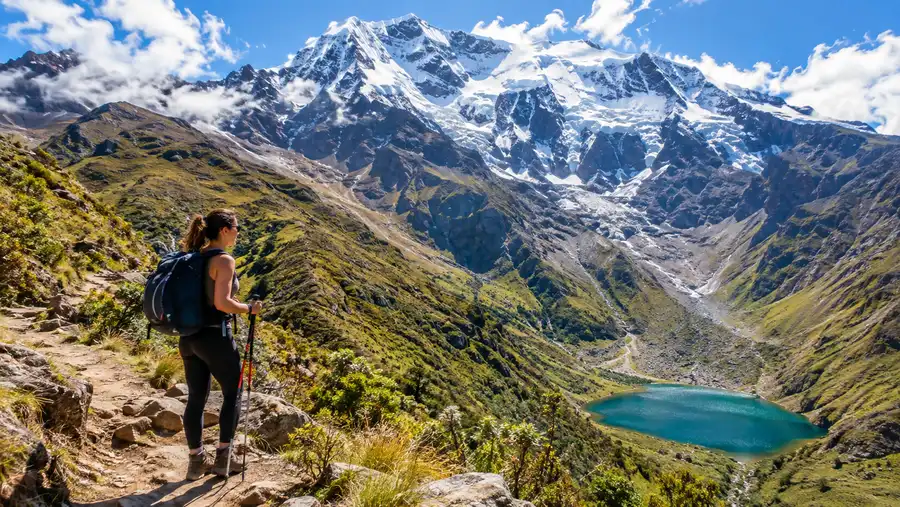
Humantay Lake sits at 4,200 meters. The hike up covers just two kilometers, but it takes roughly 90 minutes because the incline is relentless. Your lungs will burn. Step slowly, breathe on a rhythm, and ignore the local horse wranglers trying to sell you a 90-sol ride to the top. The reward is an impossibly turquoise glacial pool nestled right beneath sheer granite cliffs. Spend 45 minutes taking photos, watch the clouds roll off the ice shelf, and then head back down to camp before the temperature plunges. Night at Soraypampa is bitter cold, easily dropping below freezing, so sleep with your base layers inside your sleeping bag.
Day 2: Conquering the Salkantay Pass to Chaullay
Day two will test your legs and your mental stamina. Someone knocks on your tent door at 5:00 AM with a steaming cup of coca tea. Outside, frost coats the grass. By 6:00 AM, you are walking. The trail ascends immediately, winding through the barren, wind-scoured valley toward the base of Mount Salkantay. Vegetation disappears within an hour, replaced by grey shale, wandering mules, and trickling streams of ice melt.
The hardest section is known locally as the "Seven Snakes" - a series of steep, jagged switchbacks that lead straight up to the pass. Take it one stride at a time. The air feels thin here, and even fit hikers find themselves pausing every twenty steps to catch their breath. Reaching the Salkantay Pass at 4,630 meters is pure euphoria. Towering avalanches rumble off the southern face of the peak in the distance, and colourful prayer flags flutter between the cairns left by generations of travelers. For an in-depth breakdown of how your body handles this specific climb, take a look at our guide to the Salkantay Trek altitude and elevation profile.
Note: Weather at the pass turns on a dime. You can go from bright sunshine to a freezing sleet storm in under ten minutes, so keep your waterproof shell and warm beanie in your daypack, not your main duffel.
What goes up must come down, and this descent is brutal on the knees. You drop over 1,700 vertical meters over the next five hours. You stop for a late lunch at Huayracmachay, a bleak outpost where warm soup feels like a miracle, before continuing down into the cloud forest. The transition is startling. Rock and ice give way to bamboo, mossy branches, hummingbirds, and damp, heavy air. By the time you stumble into Chaullay (2,900 meters) around 5:30 PM, your thighs will be trembling. Chaullay is warm, lively, and several small campsites offer five-sol hot showers and cold Cusqueña beers.
Day 3: Chaullay to Lucmabamba and the Jungle Valley
Waking up on day three feels entirely different. You are in the upper jungle, surrounded by lush vegetation, and the morning air is soft instead of freezing. The hike covers about 15 kilometers along the Santa Teresa River valley. Most of the path is a gentle downhill or rolling undulating trail, carved into the cliffside high above the rushing water. It feels like a genuine recovery day after the ordeal of the pass.
Along the trail, you pass small family-owned homesteads selling passion fruit, granadillas, and fresh avocados right from the trees. The humidity creeps up quickly. By 10:00 AM, you will want shorts and short sleeves, but do not forget bug spray - the biting sandflies along this stretch are ferocious and leave itchy red welts that last for weeks.
- Local fruits: pick up sweet passion fruits directly from farm stands along the path for about 2 soles each.
- Wildlife sightings: keep an eye out for green parrots in the canopy and the Andean cock-of-the-rock near waterfalls.
- River crossings: several wooden suspension bridges sway dramatically over the roaring rapids, making for fantastic photos.
- Insect protection: apply high-strength repellent before entering the coffee plantations around midday.
Most itineraries for the classic salkantay trek 5 day to machu picchu stop for lunch at La Playa or continue slightly further to Lucmabamba. Lucmabamba is famous for organic coffee farms. If your guide arranges it, you spend the afternoon picking red coffee cherries, roasting them over an open fire, and grinding your own espresso. In the late afternoon, many groups take an optional transport down to the Cocalmayo hot springs near Santa Teresa. Sitting in clean, natural thermal pools carved into the riverbank is the best remedy possible for aching trail legs.
Book your salkantay trek to machu picchu experience:
Day 4: Climbing Llactapata to Aguas Calientes
Day four is where budget routes and premium tours diverge. Cheaper agencies skip the morning hike and drive their groups straight to Hidroeléctrica in a crowded van. If you booked the authentic salkantay 5 day trek to machu picchu, insist on walking the original Inca Trail over the ridge to the ruins of Llactapata. It requires a stiff, three-hour uphill climb through dense forest starting right from Lucmabamba, but the effort pays off tenfold.
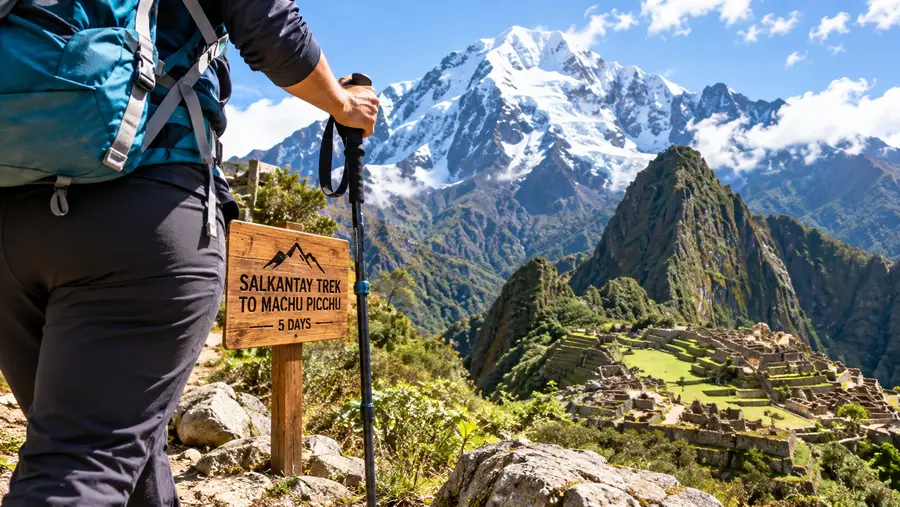
Near the top of the ridge, the trees clear, and you stumble across Llactapata, an uncrowded archaeological site hidden in the brush. Look directly across the valley through the stone doorways. Perched on the opposite mountain ridge, framed by Huayna Picchu, sits Machu Picchu itself. Seeing the citadel from this rare angle, completely empty of tour buses and selfie sticks, was honestly the highlight of my entire week. It puts the massive scale of Inca engineering into perspective.
A steep, slippery two-hour descent brings you down to the Aobamba river and the railway checkpoint at Hidroeléctrica. Here, you eat a packed lunch at a trailside restaurant before tackling the final stretch: ten flat kilometers walking beside the active train tracks to Aguas Calientes. Gravel can be hard on tired feet, and train horns echo through the narrow canyon walls every hour. You reach Aguas Calientes by late afternoon, check into a real hotel room, and enjoy a long, hot shower before meeting your group for dinner to plan the final morning.
| Stage | Distance | Approx. Walking Time | Max Altitude | Terrain Type |
|---|---|---|---|---|
| Day 1: Challacancha to Soraypampa | 13 km | 5 - 6 hours | 4,200 m | Flat dirt trail, steep shale to lake |
| Day 2: Soraypampa to Chaullay | 22 km | 8 - 9 hours | 4,630 m | Rocky switchbacks, steep gravel descent |
| Day 3: Chaullay to Lucmabamba | 15 km | 5 - 6 hours | 2,900 m | Dirt path, dirt road, rolling jungle |
| Day 4: Lucmabamba to Aguas Calientes | 18 km | 7 - 8 hours | 2,810 m | Inca stone path, flat railroad gravel |
| Day 5: Citadel & Return to Cusco | 4 - 8 km | 2 - 4 hours | 2,430 m | Stone steps, paved terraces |
Day 5: The Climax at Machu Picchu and Return to Cusco
The final morning begins before dawn. Depending on your entry circuit, you either join the long queue for the 25-minute shuttle bus up the switchbacks or leave your hostel at 4:30 AM to hike the steep stone stairs through the cloud forest. Walking up takes about an hour of sweaty climbing in the dark. Entering through the main gate as the morning mist lifts off the stone temples is an unforgettable moment. The ancient city seems to float on the ridge between the green peaks.
Your guide will walk your group through your designated circuit for roughly two hours, explaining the history of the temples, agricultural terraces, and royal quarters. If you managed to secure an extra permit for Huayna Picchu or Machu Picchu Mountain, you tackle that immediately following the main tour. Huayna Picchu is steep and exposed, featuring narrow stone steps carved directly into the cliff face, while Machu Picchu Mountain offers a wider, longer, and higher path with sweeping panoramic vistas.
- Passport requirements: bring your original physical passport, as park rangers inspect it thoroughly alongside your printed ticket.
- Luggage restrictions: daypacks larger than 40 liters are not permitted inside the ruins and must be checked at the entrance gate for 5 soles.
- No single-use plastics: carry your water in reusable bottles or hydration bladders to avoid issues at security.
- Return logistics: keep your train ticket handy, as boarding at Aguas Calientes station begins 30 minutes prior to departure.
After finishing your tour, you take the bus back down to Aguas Calientes, grab a quick lunch at a local cafe, and head to the train station. The train ride along the Urubamba River to Ollantaytambo takes about 90 minutes. From Ollantaytambo, tour companies load hikers into shared minivans for the final two-hour drive back to Cusco, dropping you off near the Plaza de Armas around 8:00 PM.
Frequently Asked Questions about 5 day salkantay trek
What is the typical salkantay trek 5 days to machu picchu cost?
A budget group tour booked locally in Cusco usually ranges between $250 and $350 per person, while mid-range and premium operators charge anywhere from $500 to $1,200 depending on dome accommodations, train upgrades, and food quality.
How hard is the 5 day machu picchu hike compared to the Inca Trail?
The Salkantay route is physically harder than the classic Inca Trail because the pass is higher (4,630 meters versus 4,215 meters) and the total distance walked is greater, but it has far fewer punishing stone stairs and allows for horse support.
Do I need to book the salkantay trek to machu picchu in 5 days far in advance?
While the trail itself does not have a strict permit cap like the Inca Trail, Machu Picchu entrance tickets and return train seats sell out weeks or months ahead during the peak dry season from May to September. Booking at least two months out is smart.
Quick Reference
- Total distance: roughly 74 kilometers
- Highest elevation: Salkantay Pass at 4,630 meters
- Best trekking months: May through September
- Starting point: Challacancha (Mollepata)
- Finishing point: Machu Picchu citadel
Book your salkantay trek to machu picchu experience:
The Bottom Line
Completing this classic five-day mountain journey requires grit, strong lungs, and an acceptance that you will spend several days smelling of woodsmoke and damp wool. The dramatic shift from glacial peaks to humid cloud forests makes every blister worth the trouble. If you give yourself two full days to acclimatize in Cusco beforehand, pack plenty of warm layers, and pace yourself on the climbs, the trail rewards you with an adventure that leaves the standard tourist bus routes far behind.
Read more about salkantay trek to machu picchu.